Platform as a Product: Why Infrastructure Fails Without Product Thinking
What is Platform as a Product? Learn how product thinking helps platform engineering teams improve developer experience, governance, and cloud infrastructure delivery.

Modern engineering teams rarely struggle because they lack tools. They struggle because the platforms behind those tools were never designed with the same intentionality as the products they support.
As cloud infrastructure grows, platforms have become the backbone of how software is delivered. Yet many of these platforms evolve as fragmented systems which are collections of scripts, services and conventions rather than cohesive, product-driven experiences. The result is predictable: developers face friction, security becomes reactive and platform teams spend more time maintaining systems than enabling teams to move faster.
This is why Platform as a Product is important. It reframes the platform not as internal infrastructure but as a deliberately designed product with clear users, defined outcomes and continuous improvement at its core.
At Pvotal, we’ve built this philosophy into Infrastream, our platform engineering product that enables engineering teams to build, deploy and scale cloud infrastructure in a governed and automated way. Infrastream brings product thinking into infrastructure itself where developer intent, security policies and automation come together in a single system that reduces complexity instead of adding to it.
In this blog, we’ll explore what Platform as a Product really means, the foundational principles behind it, the best practices for building effective platforms and the challenges teams face when adopting this approach. We’ll also explore how our modern platform engineering product, Infrastream, helps teams move from fragmented infrastructure to a unified, product-driven delivery model.
What is Platform as a Product?
Platform as a Product means treating internal platforms (the tools, infrastructure and systems engineers use) with the same care and intention as external products. Instead of building infrastructure as a set of disconnected tools, teams design it as a complete system with:
- Clear users (developers, platform engineers and security teams)
- Product: The internal platform (CI/CD, cloud tools, APIs and deployment systems).
- Defined outcomes (faster delivery, safer deployments and lower cost)
- Continuous improvement based on feedback
It shifts the thinking from: “what tools do we provide?” to “what experience are we enabling?”
In this model, the platform is not just infrastructure. It is a product that evolves with its users and is measured by how well it helps teams build and deliver software.
Why Platforms Fail Without Product Thinking
When platforms are not built with product thinking, failure usually shows up as friction, low adoption and growing complexity rather than a single technical issue. The root cause is that many platforms are designed as internal infrastructure systems not products built around user experience and outcomes.
One major issue is the shift from product thinking back to ownership thinking, where success is defined by control and system correctness instead of how easily developers can build and ship software. This quickly creates a gap between what the platform delivers and what users actually need.
Another challenge is stakeholder misalignment. Platforms serve developers, security, operations and leadership, each with different priorities. Without a clear product direction, the platform becomes fragmented and harder to evolve. This lack of alignment is often mirrored in cloud spending visibility as well. According to The 2024 State of Cloud Cost Intelligence Report, around 30% of organizations clearly understand where their cloud budget is going, while the remaining 70% still lack full visibility and proper cost attribution across their cloud spend.
Teams also struggle to balance speed with control. Too much governance slows delivery, while too much speed weakens standards. Without intentional design, the balance breaks.
As platforms grow, over-engineering becomes common. Teams try to solve too many use cases at once, which adds unnecessary complexity and reduces usability.
In the long run, inconsistency across teams and environments starts to appear, leading to fragmentation and unpredictable experiences.
Finally, even well-built platforms fail without adoption. If developers don’t see clear value in their day-to-day work, they will bypass the platform entirely, creating shadow systems and duplication.
How Infrastream Reflects the Platform as a Product Approach
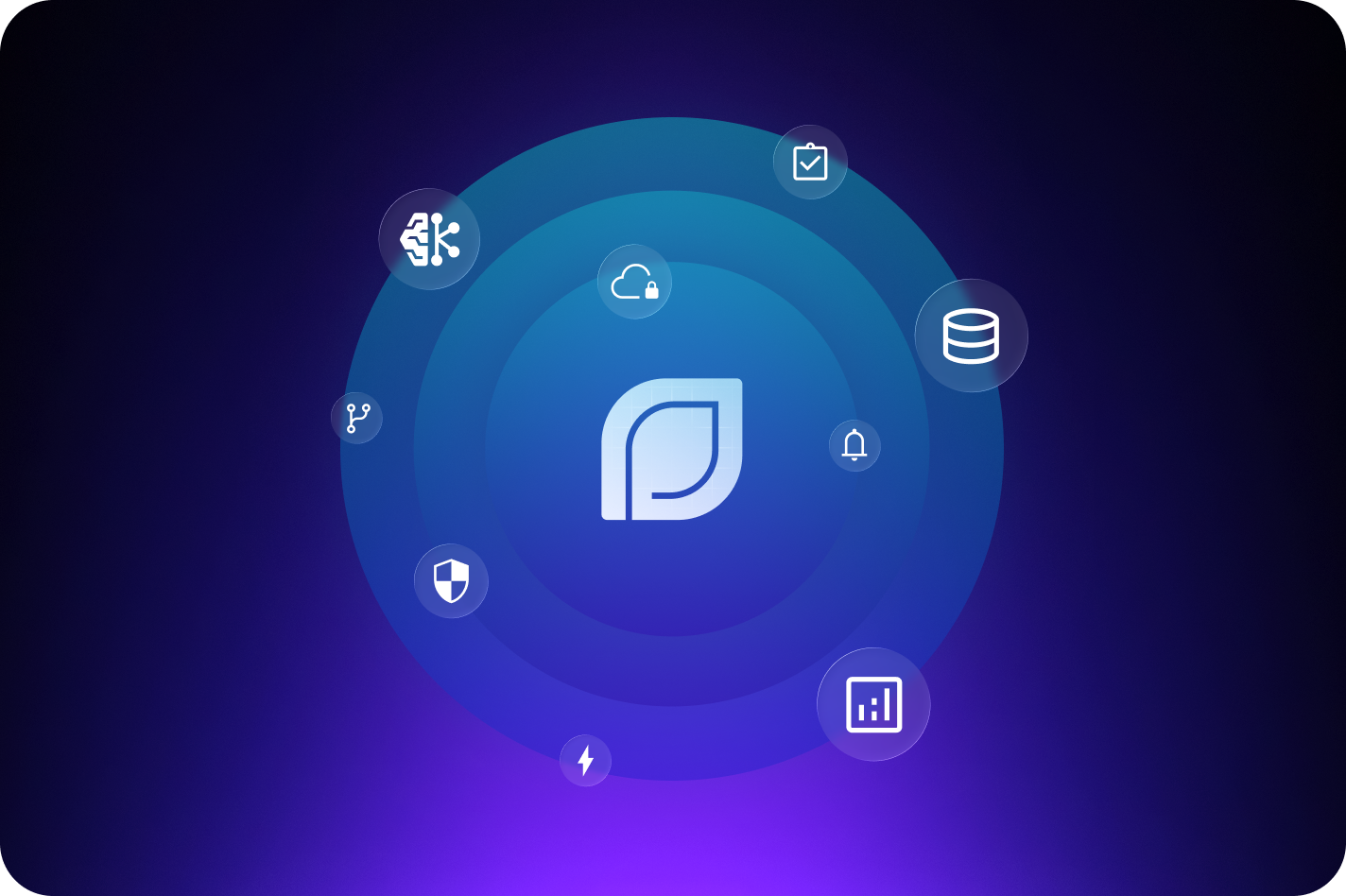
At its core, Infrastream is built on the idea of Platform as a Product. Instead of treating infrastructure as a collection of tools and manual processes, Infrastream turns it into a single, intentional system designed around user experience, clear outcomes and built-in governance.
It brings together developer intent, security rules and automation into one platform that helps teams move faster without losing control.
1. Intent-driven infrastructure
Everything in Infrastream starts with intent.
Instead of manually configuring infrastructure step by step, developers simply declare what they need. The platform then translates that intent into a structured, validated and secure setup.
This approach:
- Removes manual configuration work
- Reduces errors caused by misconfiguration
- Makes infrastructure easier to understand and reproduce
It shifts infrastructure from “how do I build this?” to “what do I want to achieve?”
2. Built-in governance through a rulebook
Infrastream applies governance automatically through a built-in rulebook.
Every request is checked against defined policies before anything is deployed. This ensures that:
- Security rules are always enforced
- Compliance requirements are followed by default
- Unsafe configurations are blocked early
Instead of security being a separate process, it becomes part of how the platform works.
3. Pvot as the execution layer
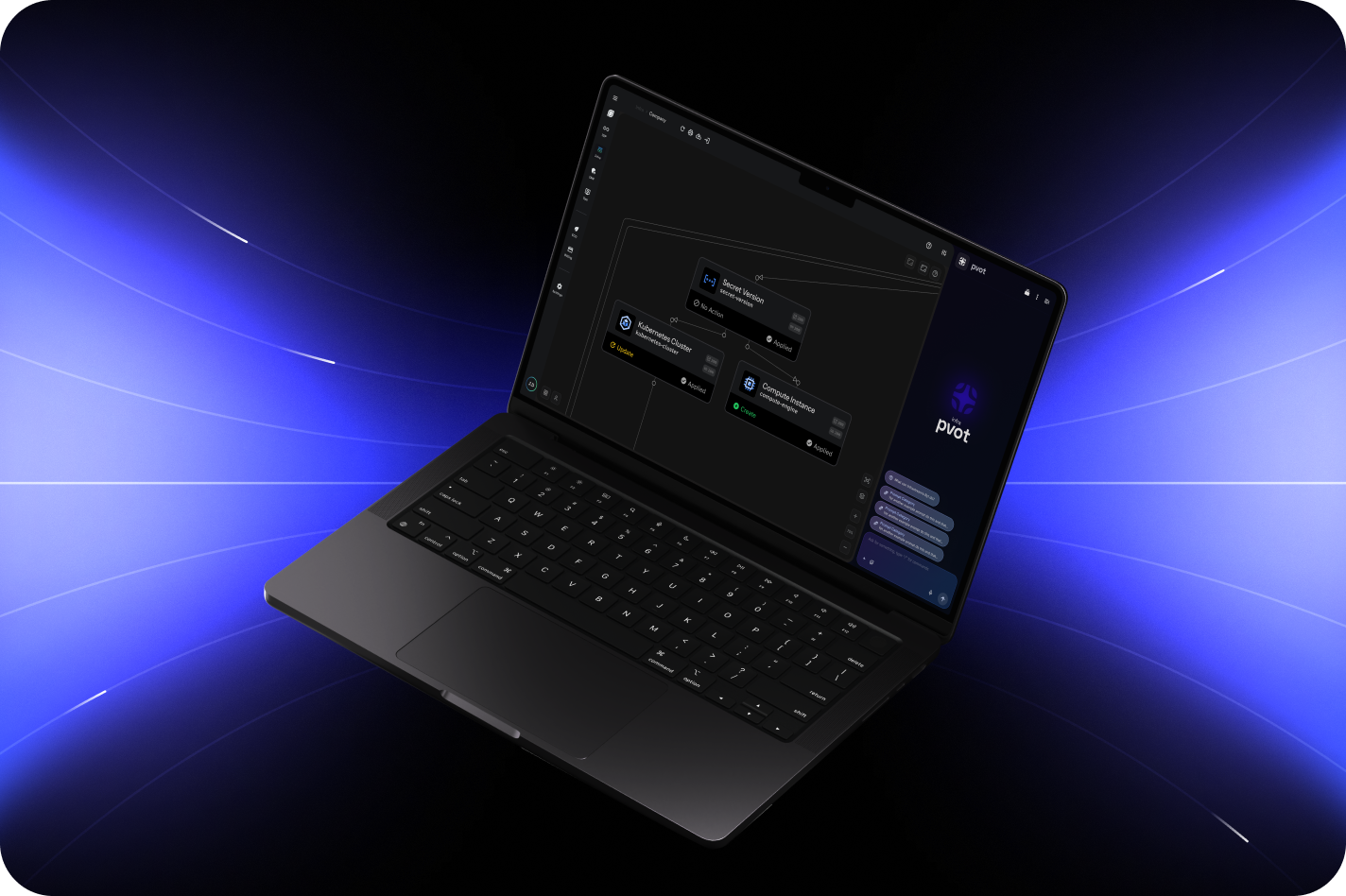
At the center of Infrastream is Pvot, the system that acts as the execution layer for infrastructure.
Pvot:
- Translates intent into actions
- Applies policies and guardrails
- Orchestrates infrastructure deployment safely
It acts like an infrastructure operator, ensuring that every change is consistent, controlled and aligned with platform rules.
4. Standardized infrastructure through a factory model
Infrastream runs on a standardized “factory floor” model.
This means:
- Every environment is built from a consistent foundation
- Development, staging and production behave predictably
- Infrastructure drift is eliminated
Instead of each team building infrastructure differently, everything follows the same structured approach.
5. Security and compliance by default
Security is not optional in Infrastream, it is built into every layer.
This includes:
- Automated policy enforcement
- Controlled access and identity validation
- Guardrails that prevent unsafe deployments
- Auditability across all infrastructure actions
This allows teams to move quickly without creating security gaps.
6. A unified experience for engineering teams
Infrastream brings everything together in one system:
- Infrastructure provisioning
- Security enforcement
- Deployment workflows
- Visibility and control
Instead of switching between multiple tools and processes, teams get a single, consistent experience from intent to production.
If you’d like to see Infrastream in action, you can schedule a demo with our team.
Best Practices for Building a Platform as a Product
Building a platform as a product is not only about architecture or tooling. It is about how teams think, work and continuously improve the experience for the people using the platform. The goal is to make infrastructure feel simple, predictable and reliable even when what’s happening behind the scenes is complex.
Below are key best practices that help teams build effective product-driven platforms:
1. Prioritize the needs and feedback of platform users
The most important users of any platform are the engineers who rely on it every day. If their needs are not properly understood, the platform will quickly become difficult to use or something teams start to avoid.
Good platforms are built around constant feedback, where developers openly share what slows them down, platform teams pay close attention to real usage patterns and improvements are made based on actual pain points rather than assumptions. When these feedback loops are strong, the platform improves continuously and becomes easier to use over time instead of harder.
2. Build with a diverse, cross-functional team
Strong platform teams usually bring together a mix of skills and perspectives that complement each other. Platform engineers focus on building and maintaining the underlying infrastructure, developers bring an understanding of real delivery challenges and day-to-day workflows, security teams ensure risk and compliance are properly addressed and product thinking helps guide usability and the overall experience of the platform.
This combination ensures the platform is not only technically correct but also practical, intuitive, and usable in real-world environments where different teams rely on it every day.

3. Continuously improve the platform
A platform should never be treated as a one-time project. It is a living system that must continuously evolve as the organization grows, changes and scales. As more teams adopt it and new use cases emerge, the platform needs to adapt in a way that keeps it useful, reliable and aligned with the actual work happening inside the organization.
Continuous improvement means regularly updating the platform based on how it is actually being used, removing outdated or unused features that add unnecessary complexity, improving performance and usability over time and responding quickly when teams experience friction in their workflows. This ensures the platform does not become static or outdated but instead remains relevant and closely aligned with how engineers build, ship and operate software day to day.
4. Integrate security practices from the beginning
Security should not be something added after the platform is built. It must be part of the design from the start, shaping how the platform is designed and how systems operate from the very beginning.
When security is built in early, access is controlled by default, policies are enforced automatically, misconfigurations are reduced, and compliance becomes easier to maintain. This helps teams move faster without increasing risk.
5. Continuously monitor platform performance
Continuously monitoring platform performance means measuring not just how well the system is running but also how effectively it’s enabling engineers to do their work. A platform can be technically stable but still slow teams down if it creates friction in everyday workflows.
This includes tracking deployment success rates, how long it takes to ship changes how often errors or rollbacks occur and where users experience friction across different workflows. These signals go beyond system health and help reveal how the platform is performing in real usage conditions.
By monitoring both technical metrics and user experience metrics together, platform teams are able to identify the real bottlenecks and focus improvements where they matter most.
6. Create a culture of feedback and contribution
The best platforms are built with their users not just for them. When users feel involved, adoption happens more naturally and the platform becomes easier to improve over time.
This can be encouraged by making it simple to suggest improvements, involving developers in platform design decisions and treating the platform as a shared system rather than something owned by a single team.
Over time, this creates a platform that evolves with the organization instead of lagging behind it.
Conclusion:
Platforms Are No Longer Tools They Are Products
The way platform engineering teams build and deliver software has changed. Infrastructure is no longer just a background function, it is a core part of how products are shipped, scaled and secured.
However, many platforms have not kept up with this shift. They are still treated as tools to be assembled and maintained, rather than systems designed for real users with clear outcomes in mind.
This is why Platform as a Product matters. It changes how teams think about infrastructure. Instead of focusing only on systems and configurations, it shifts the focus to experience, usability and continuous improvement. A platform should make work easier not more complex.
When platforms are designed with product thinking, they become easier to adopt, easier to scale and more reliable over time. Teams move faster because the system is predictable. Security improves because it is built in not added later and platform teams can focus on enabling engineers instead of constantly reacting to problems.
At Pvotal, this thinking is what shaped Infrastream. It is built as a platform engineering product that turns infrastructure into a structured, automated and governed system. From developer intent to production, everything is designed to work as one connected experience.
Platforms are no longer just tools that support engineering work. They are products that define how engineering work happens and the teams that understand this shift will be the ones that build faster, safer and at scale.